Kerry James Marshall: The Histories
Location: Royal Academy of Art, Burlington House, London, The UK
Duration: Sept 20, 2025-Jan 18, 2026
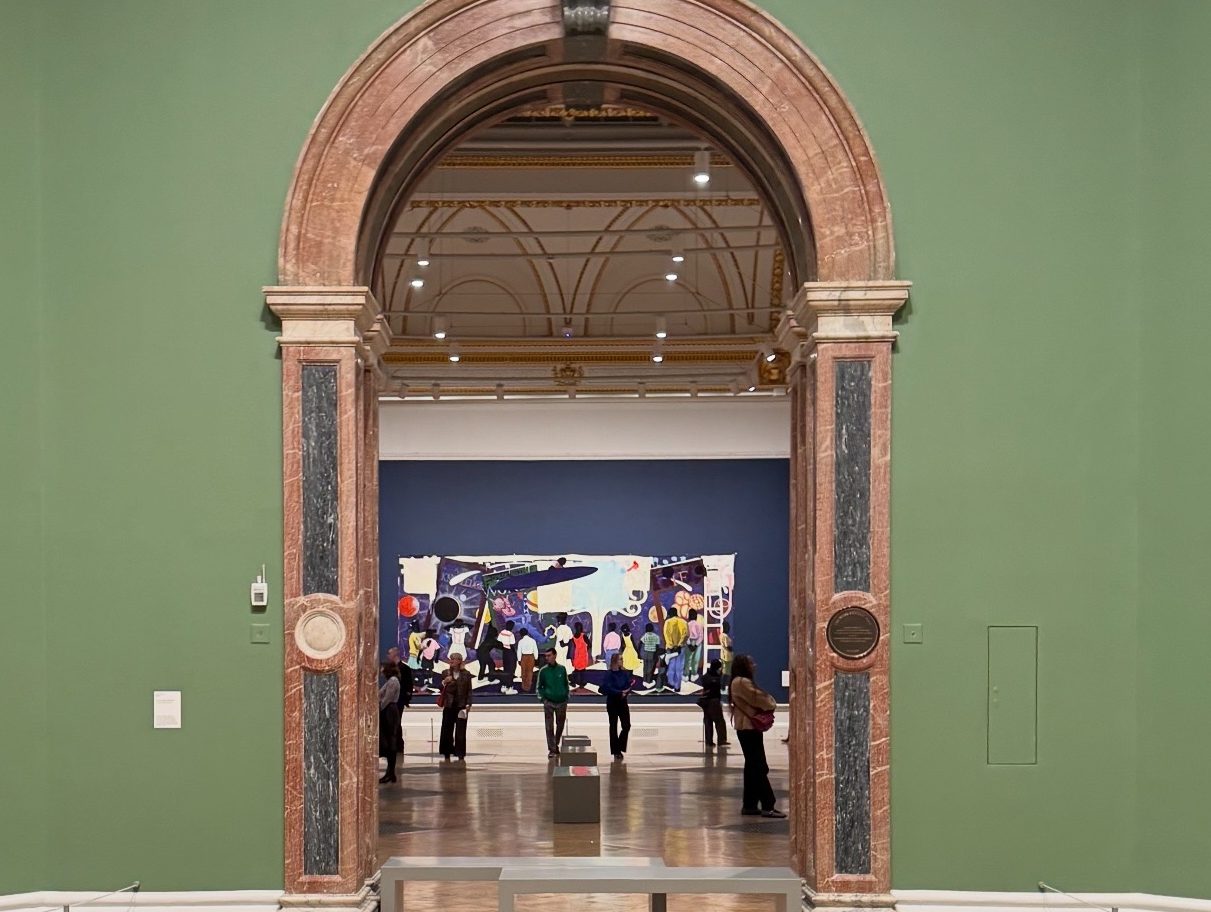
The exhibition at the Royal Academy of Arts stands out for its scale and significance—an ambitious retrospective dedicated to one of the most influential African-American artists, Kerry James Marshall (b.1955). Featuring eleven distinct cycles of work produced since the 1980s, the show highlights the Alabama-born artist’s mastery of large-scale figurative painting and his unwavering commitment to portraying Black life with dignity, complexity, and presence.
The Black Bodies

A central achievement of the exhibition is Marshall’s treatment of Black skin. His figures are rendered in multiple shades—from charcoal to onyx—rejecting any singular definition of Blackness. The surfaces shift, absorb light, and reveal layered narratives. These are not anonymous silhouettes but richly constructed characters: slave rebels, poets, activists, and everyday people. The choice of medium, tone, and texture turns each body into a site of assertion and visibility.
Moments in Black History
Marshall has long been a driving force in inserting Black history into the Western art canon. His paintings and collages converse directly with celebrated historical compositions—such as Jacques-Louis David’s Oath of the Horatii (1784)-yet focus on those who were excluded from those grand narratives. Across the galleries, viewers encounter pivotal moments in Black history, from the Middle Passage to the Civil Rights Movement. Marshall’s work functions as both remembrance and correction, reconfiguring the canon by placing the silenced at its center.
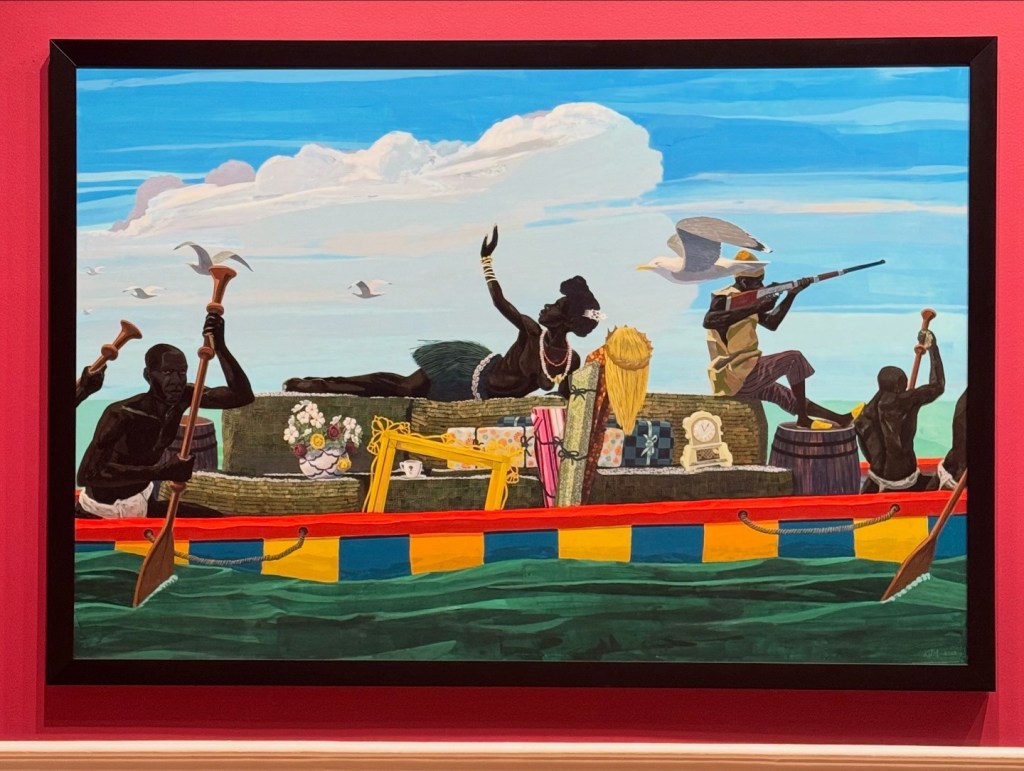
Cinematic Storytelling: Through dynamic, filmic scenes like Haul (2024), Marshall reframes grand history painting from the perspective of a Black man, revealing the visual absences of the past.
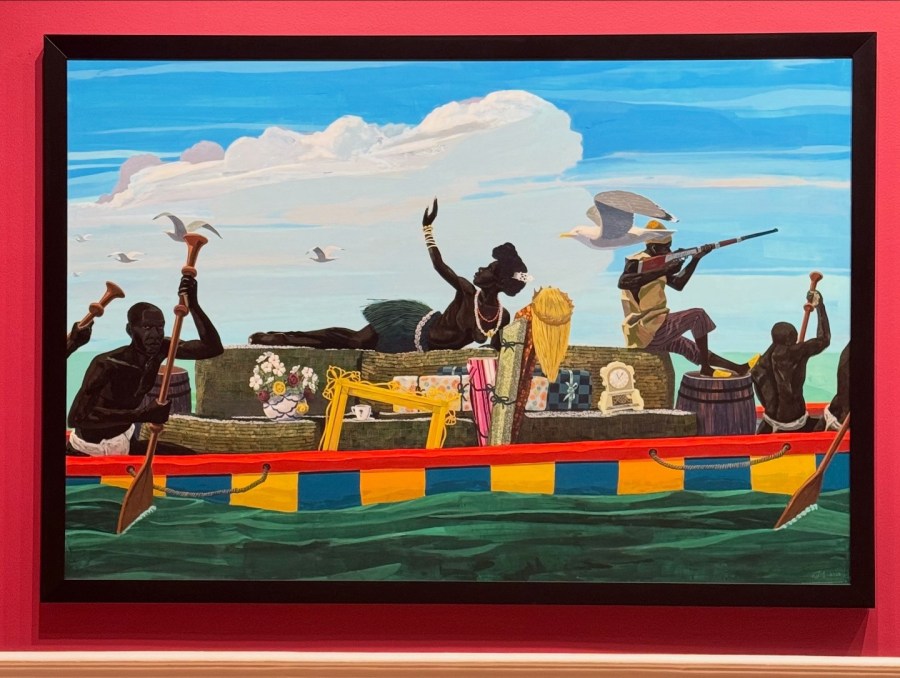
Kerry James Marshall, Haul, 2024
One of the most powerful sections of the retrospective presents a trio of paintings depicting people, goods, and valuables being transported by canoe. Every figure is in motion, yet the destination remains uncertain—a metaphor for the fractured, dislocated histories of the African diaspora. Among these, Haul (2024) stands out. A reclining woman raises her jeweled hand toward the sky, positioned atop a brightly painted canoe loaded with items such as a European clock, a gilded picture frame, and a vase of flowers. Nearby, a gunman aims his rifle while others row with urgency. The dynamic composition echoes Delacroix’s Liberty Leading the People (1830), yet here the narrative centers on the realities of the transatlantic slave trade—an event contemporaneous with the French Revolution but only given imagery more than a century later. Marshall reframes the grand historical painting, reclaiming the right to narrate Black experience with the same scale and ambition.
Conclusion: The History and the Present
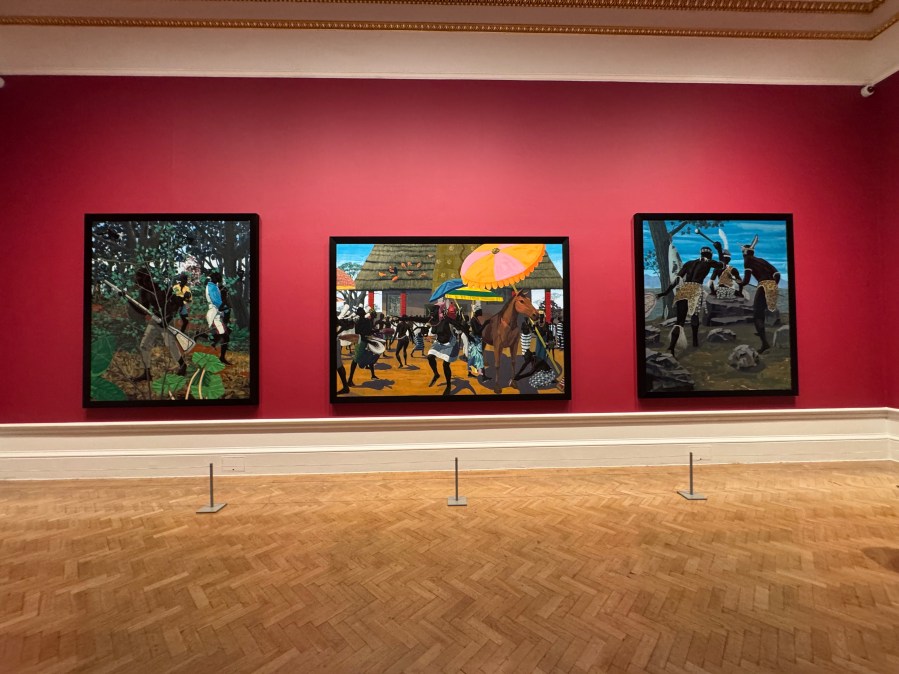
In bringing together four decades of work, this retrospective makes one thing unmistakably clear: Marshall’s project is not only about revisiting the history that has been omitted, but about insisting on its place in the present. His paintings pull the past into view with undeniable force—reclaiming narratives, exposing erasures, and reframing Western art history through a Black lens. At the Royal Academy, these images do more than recount history; they challenge contemporary viewers to confront the enduring legacies of race, representation, and power. In doing so, Marshall reminds us that the story of art—and the story of our time—is incomplete without the figures who were long left out.
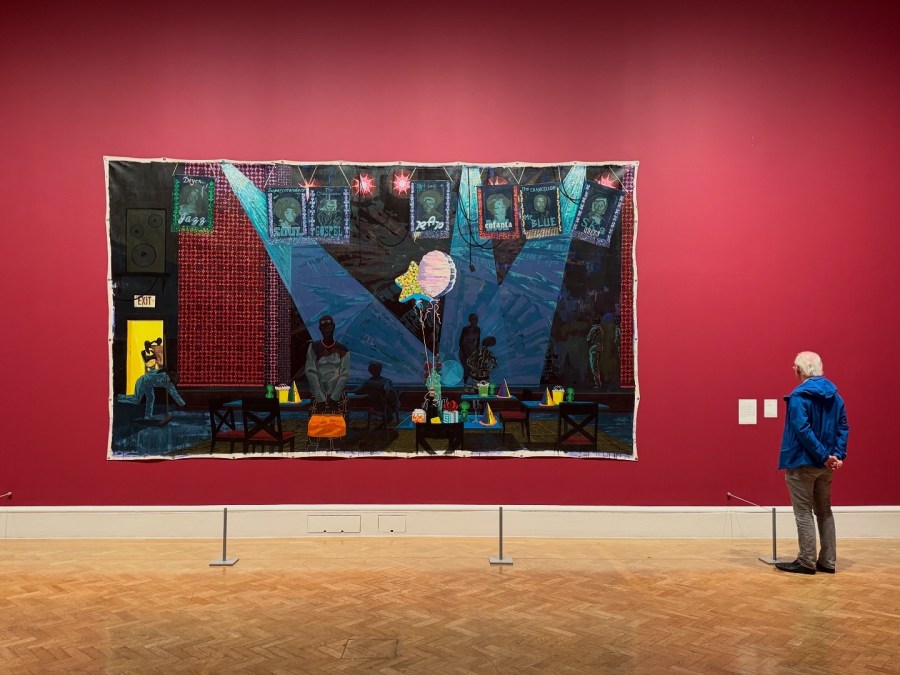
 Jenniyo. Artchive and Blog
Leave a comment