
This journal is PART II of the Seasonal Pop Up Gallery Series and the second half of the Lehmann Maupin pop up gallery show in Taipei. Be sure to also check my journal to see some highlights from first half of the show. Links below.
The second part of the pop-up programme “Medium is Memory” presents 6 contemporary artists: Do Ho Suh, Angel Otero, McArthur Binion, Lee Bul, Shirazeh Houshiary and Mandy El-Sayegh. The main gallery features a yellow fabric refrigerator, an expressive painting of a filled bathtub, and a bold green and blue painting on handwritten notes. I think the message here is clear, the show is going to be focused on a tactile household experience that may speak to many.
Do Ho Suh (South Korea, b. 1962)
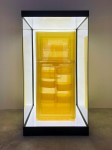

Do Ho Suh,
Karma (4 columns), 2015Do Ho Suh, Exit Series: Stove Elements, 348 West 22nd Street, New York, NY 10011, USA, 2019 

Do Ho Suh is a well-celebrated contemporary Korean artist, known for his life-size sewn fabric sculptures that resemble his residences in Berlin, New York and Seoul. Suh is interested in the malleability of space in both its physical and metaphorical forms. His works record his memory, personal experience, and yearning for security regardless of its geographical location. The life-size soft sculptures of the artist’s room or furnitures may speak to a displaced or even a diaspora experience shared by many people.
In Specimen series, Suh replicates in fabric individual elements such as refrigerator and stove top found in his previous homes. By isolating these objects, the artist reflects on one’s frequent and tactile relationship with these specific objects in a domestic space.
Angel Otero (Puerto Rico, b. 1981)
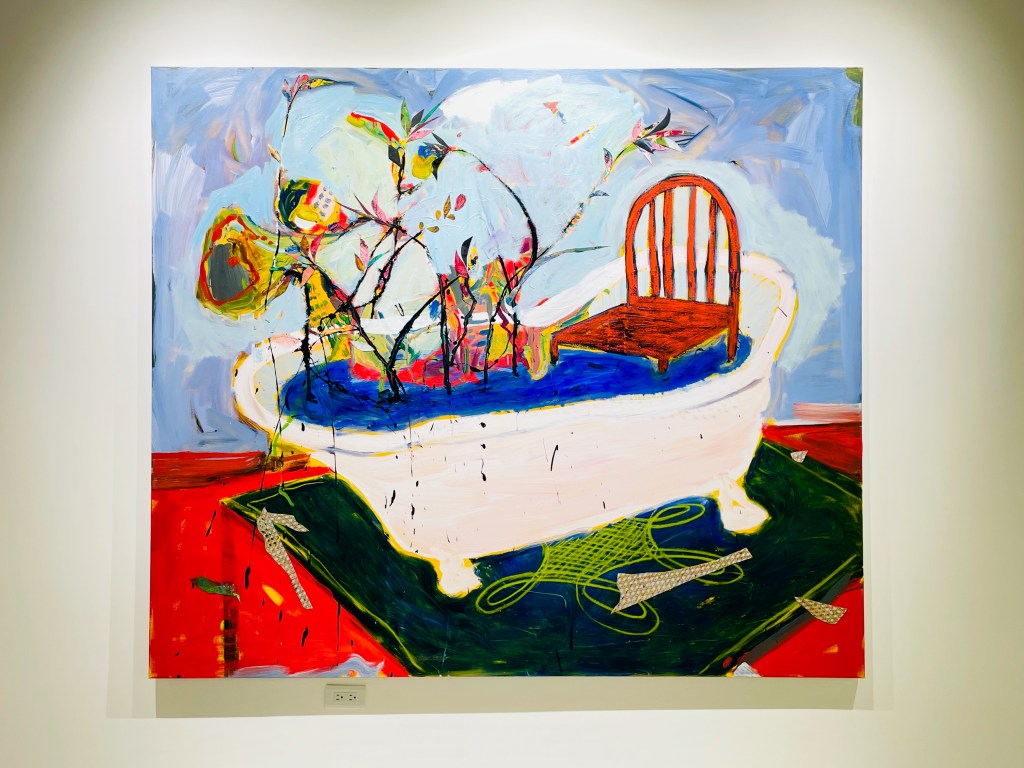
Angel Otero, Cold Facts, 2021 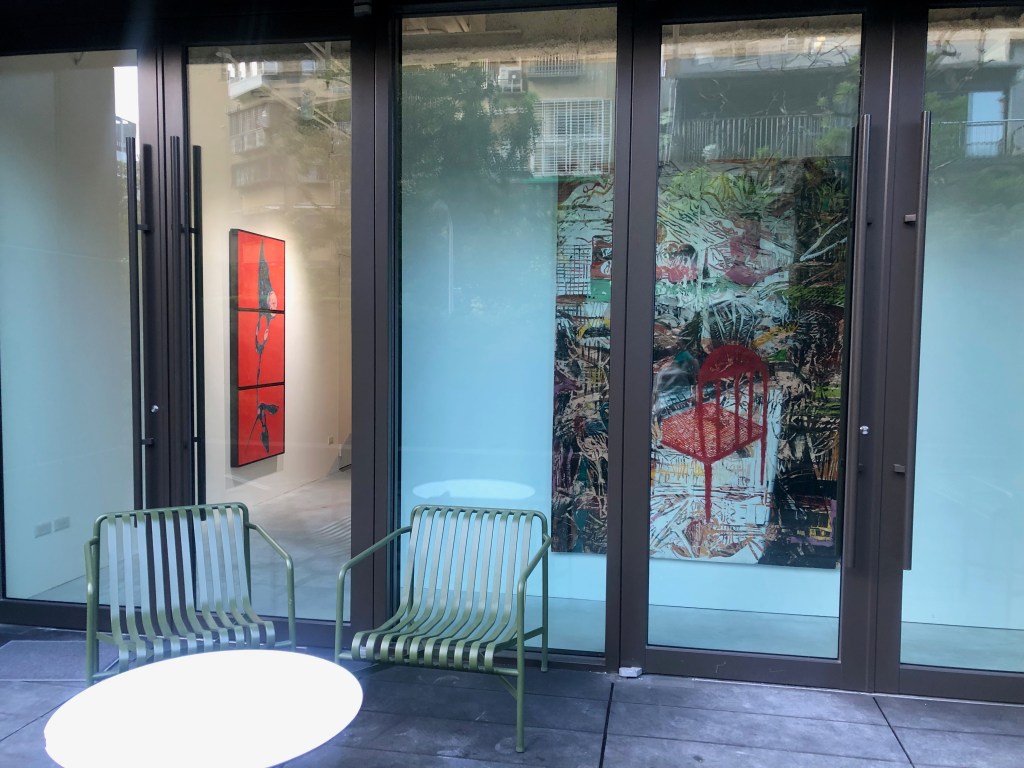
LEFT: Lee Bul, Perdu XVIII, 2019.
RIGHT: Angel Otero, Red Silence, 2021
In 2009, Otero received a BFA from the School of Art Institute of Chicago, showed at Kavi Gupta Galleryin New York, and participated in the exhibition Constellation at Chicago’s Museum of Contemporary Art.
Drawing inspirations from his personal experience and memory, Otero’s “deformation” painting process resembles an unconventional form of collage. The artist begins by painting representational imagery onto large sheets of glass; as the paint starts to dry he scrapes skins of oil paint from the surface, which are then reassembled and applied to a new surface—be that a canvas, tapestry, or even steel sculpture—to create multi-layered abstract compositions.
Lee Bul (South Korea, b. 1964)

Lee Bul, Perdu LXXVIII, 2021. 
Lee Bul, Untitled (Mekamelencolia – Velvet #16 DDRG35AC), 2020 
Lee Bul, Untitled (Mekamelencolia – Velvet #16 DDRG35AC), 2020
Lee Bul is a contemporary sculpture and installation artist from South Korea. She draws inspiration from diverse sources ranging from films, literature, architecture, to European and South Korean history. Lee Bul is known for fusing the forms of body and technology. She invites the audience to think about the dystopian and utopian possibility in the increasing technological culture.
Medium is Memory presents the Perdu series from Lee Bul. The series aims to show the binary between the artificial and the organic, both conceptually and materially. The retro-futuristic imagery is composed of mother-of-pearl, velvet, leather, or the artist’s hair, acrylic shards, crystals, and dried flowers. The diverse and seemingly opposing materials iterates the concepts of ,and beyond, the individual body, biology, and technology. The paintings were recently exhibited in New York at Lehmann Maupin and in the artist’s 2019 exhibition at Martin Gropius Bau in Berlin.
Shirazeh Houshiary (Iran, b. 1955)
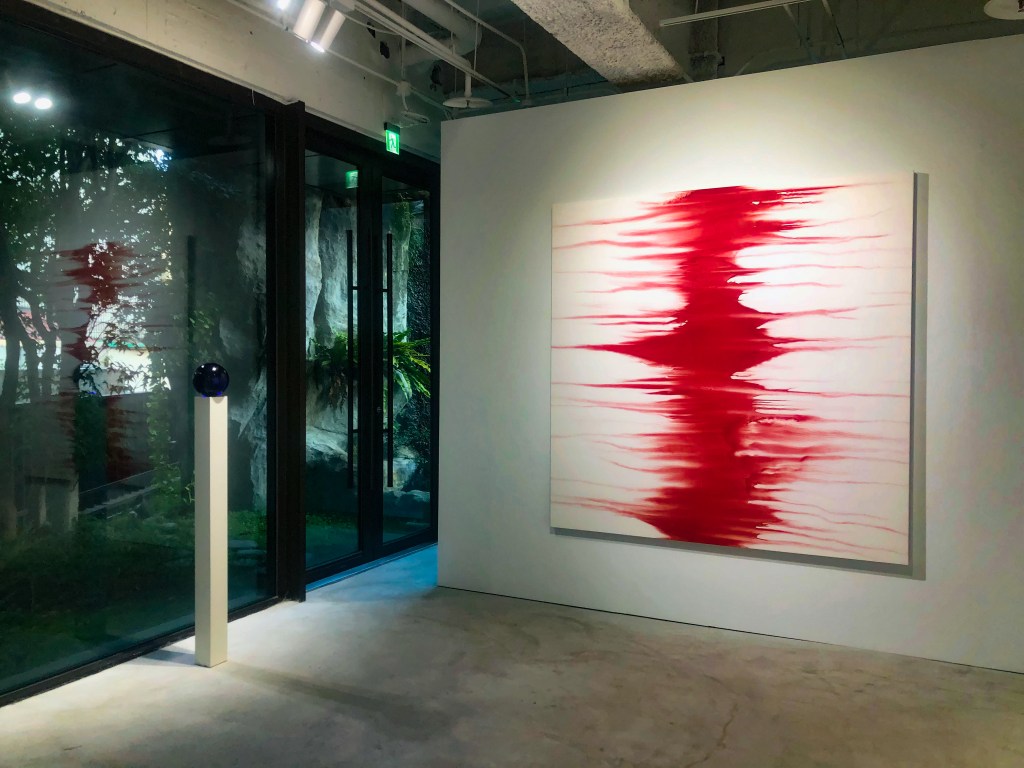
LEFT: Helen Pashgian, Untitled, 2018
RIGHT: Shirazeh Houshiary, Styx, 2018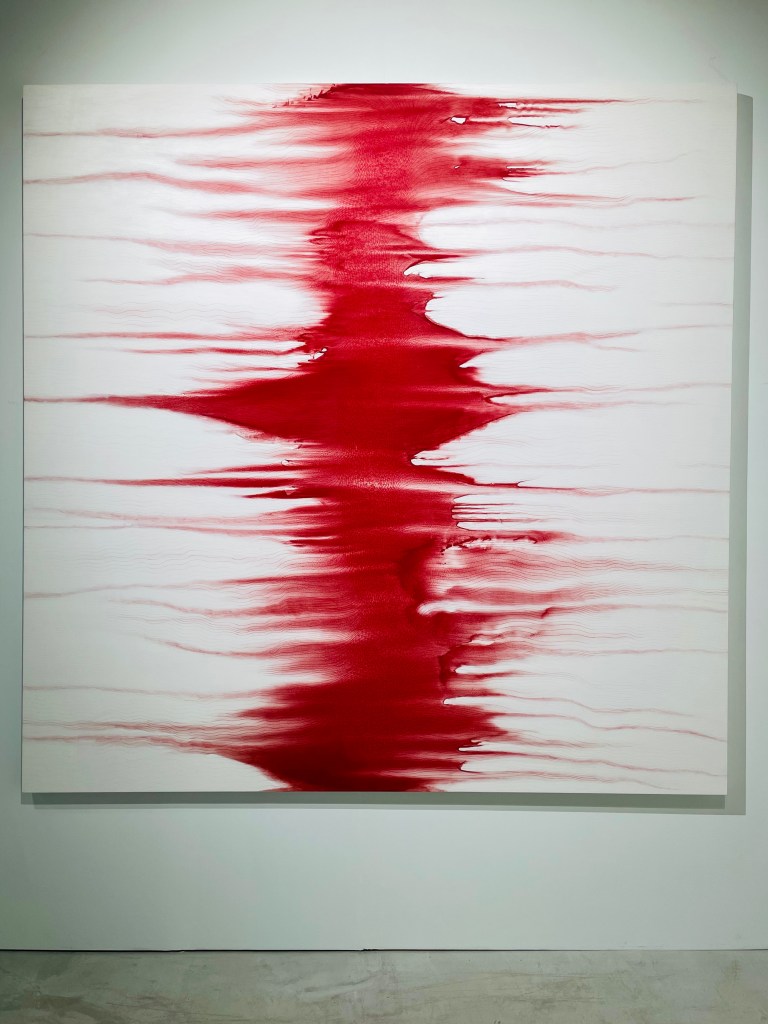
Shirazeh Houshiary, Styx, 2018
Born in Iran and now based in London, Shirazeh Houshiary is known for her paintings, sculptures, animations and site-specific installations. Veils, membranes and mists are leitmotifs in work that attempts to visualize modes of perception, science and the cosmic. Houshiary draws inspiration from sources as wide-ranging as Sufism, Renaissance painting, contemporary physics and poetry. In Styx (2018), the opposing Arabic phrases “I am” and “I am not” are embedded in the composition, oscillating freely between focused and unfocused states. In the river Styx, the meaning of our existence becomes literally superfluous and lost.
Helen Pashgian (California, USA, b. 1934)
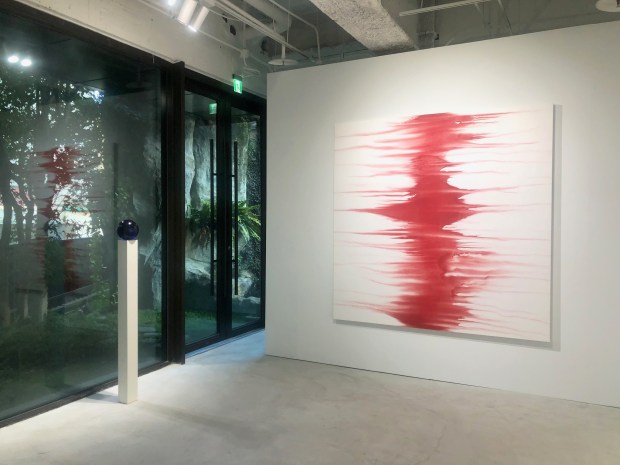
LEFT: Helen Pashgian, Untitled, 2018
RIGHT: Shirazeh Houshiary, Styx, 2018
Pashgian is a pioneer and pre-eminent member of the 1960s Space and Light movement in Southern California, which is a parallel movement to the Minimalist movement in New York. Over decades of artistic practice, Pashgian has produced many series of sculptures of vibrantly colored, semi-translucent spheres and lenses. She adapts an innovative application of industrial epoxies, plastics, and resins to create semi-translucent surfaces that appear to filter and contain illumination. Her sculptures often appear suspended, embedded, or encased. Trained as an art historian with a focus on the Dutch Golden Age artist Johannes Vermeer, the painter of light, Pashgian views light itself both the medium and the message.
McArthur Binion (American, b, 1946)

McArthur Binion, DNA:Study, 2019.
Now based in Chicago, McArthur Binion is represented by Richard Gray Gallery and Lehmann Maupin gallery. Binion describes himself as a “Rural Modernist” who produces autobiographical abstract compositions with elements of abstraction and Modernism. Binion frequently uses oil stick, crayon, and, more recently, laser-printed images to create his lushly textured and colored, geometrically patterned works. Working in New York among his contemporaries Brice Marden, Dan Flavin and Jack Whitten, Binion’s work often shows monochromatic minimalist aesthetics but refuses any easy categorizations.
Medium is Memory exhibition showcases a painting from Binion’s DNA series. Binion creates grid-like pattern over an “under conscious” of his personal documents and photographs, in this case, the address book he kept from the 1970s to 1990s while living in New York.
Mandy El-Sayegh (Malaysia, b. 1985)

CLOSE UP Mandy El-Sayegh, Dharani, 2021. 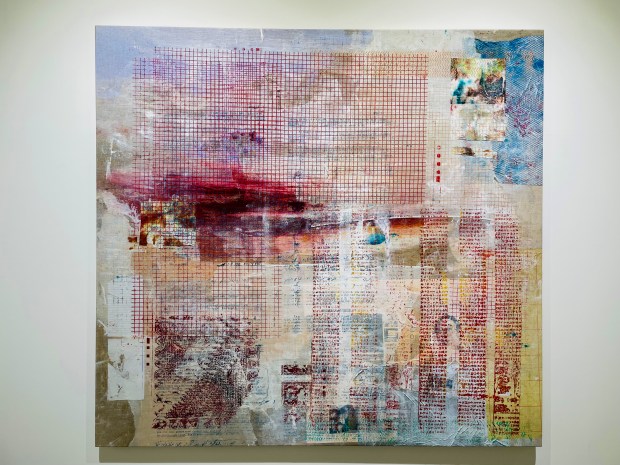
Mandy El-Sayegh, Dharani, 2021.
The UK based painter is an emerging talent who has worked with blue-chip galleries including Lehmann Maupin, Whitechapel gallery, Thaddeaus Ropac and Chisenhale Gallery. The artist ‘sutures’, as she calls it, found objects ranging from pages from the Financial Times to her father’s scripts to compose the heavily layered canvas. El-Sayegh builds a new system from her deliberate choice of objects. The deeply personal, political and cultural paintings are very much about linguistics and the idea of body and flesh. Not only do the finished paintings carry light pink hue, the artist specifically chose Financial Times for its flesh tone theme color. El-Sayegh started her “net-grid” paintings in 2010. El-Sayegh was shortlisted for the Max Mara prize. Mandy El-Sayegh is currently featured in the group show Body Topography with Lehmann Maupin in London.


 Jenniyo. Artchive and Blog
Leave a comment